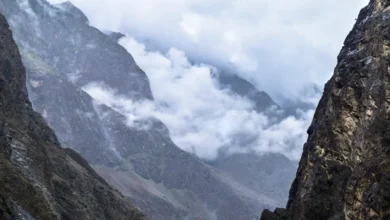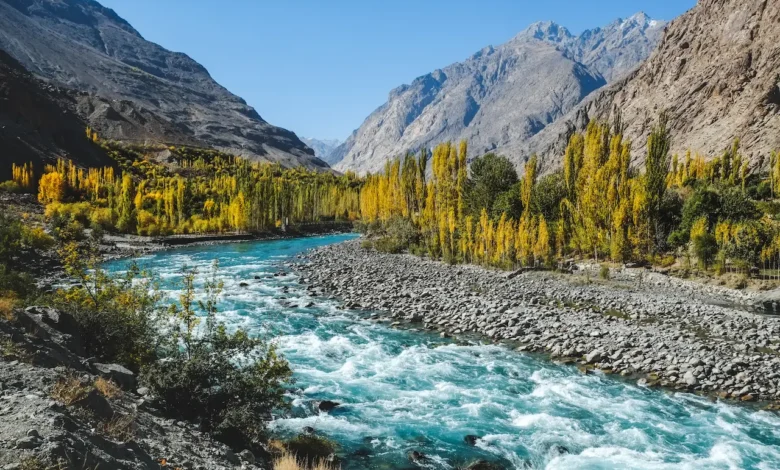
The Bagrote valley is the wettest, greenest drainage in CKNP — the closest the Central Karakoram comes to a true forested mountain valley. Tucked off the Karakoram Highway south-east of Gilgit, it offers two of the most accessible glaciers in the park, day-hike access to a 7,000-metre peak base camp, and a working agricultural landscape where Burusho farming continues much as it has for centuries. Most international visitors miss Bagrote entirely. They shouldn’t.
Where the Bagrote valley is
The Bagrote valley runs east from the Karakoram Highway near the village of Gilgit, climbing through a series of villages — Sinaker, Datuchi, Hopay — up to the foot of the Diran (7,266 m) and Rakaposhi (7,788 m) massifs. The drainage’s upper reaches contain the Hinarche and Bursil glaciers and the Diran Base Camp.
Driving time: 1.5–2 hours by jeep from Gilgit. The road is rough but improving and passable for most of the year.
What the Bagrote valley is famous for
Diran Base Camp
Diran (7,266 m) is the second-highest peak in the Rakaposhi massif and one of the most attempted 7,000-metre mountains in Pakistan. The walk to Diran Base Camp from the road head at Sinaker takes 2–3 days through pasture, juniper and alpine meadow. The base camp itself sits at 4,300 m with the south face of Diran filling the western horizon. Wonderful introductory expedition trek.
Rakaposhi Base Camp
The northern approach to Rakaposhi (7,788 m). 4–5 nights from the Bagrote village of Hopay, climbing through alpine pasture to Tagaphari camp at 3,500 m and the Rakaposhi northern base camp meadow. Spectacular mountain views; good wildflower meadows in July.
Hinarche and Bursil glaciers
Bagrote holds two large glaciers in its upper reaches. The Hinarche Glacier descends from Diran; the Bursil from the Rakaposhi side. Both have well-trodden moraine paths that day-hikers from the camps can walk to without technical kit. The Bagrote glaciers have been the subject of multiple research papers on Karakoram glacier mass balance.
Forest and biodiversity
Bagrote is the densest concentration of native trees in the park — Himalayan birch, blue pine, juniper, willow and poplar along the river bottom, with significant wild apricot, walnut and mulberry in the village belt. The valley also holds confirmed records of markhor, with a small but stable population on the cliff slopes above Datuchi. Snow leopards have been camera-trap recorded in the upper drainages. Lammergeier and Himalayan griffon vulture are commonly seen overhead.
Burusho village life
The Bagrote villages are predominantly Shia Burusho. Less tourism-impacted than Hunza on the other side of the Rakaposhi massif — visitors here are met with curiosity rather than the smooth tourism reflex of Karimabad. Homestays in Hopay and Datuchi are growing slowly. Burushaski is the language; Urdu universally understood.
Treks based out of Bagrote
- Sinaker to Diran Base Camp — 5–7 days return, moderate.
- Hopay to Rakaposhi Base Camp (north) — 6–8 days return, moderate.
- Hinarche Glacier day walks — from base camp, easy.
- Bagrote village walking circuit — cultural day walk, easy.
- Cross-valley trek to Naltar — longer, demanding, route-finding required.
Practicalities
- Accommodation: homestays in Bagrote villages; a couple of basic guesthouses; tent camping for any base camp trek.
- Permits: CKNP trekking permit required for upper treks. Issued at the Skardu or Gilgit office.
- Porters: hired in the Bagrote villages, typically Sinaker for Diran or Hopay for Rakaposhi. Same 25 kg load limit as elsewhere in CKNP.
- Season: June through September. The lower valley accessible most of the year.
- Connectivity: spotty mobile signal in the lower villages; nothing past Datuchi.
Why come to Bagrote
If you want one of the great alpine valleys in Pakistan with a real chance of solitude, this is it. Bagrote gets a tiny fraction of the visitor traffic of Hunza or the Baltoro. The forested lower valley, the wildflower pastures of the upper drainages, the access to two 7,000-metre base camps, the wildlife potential and the cultural authenticity all combine into one of the most underrated trekking destinations in CKNP. Pair Bagrote with a few days in Hunza just over the ridge and you have a varied, deep two-week itinerary in the western Karakoram.
Related reading: our Forest & flora page (Bagrote is the prime example), our wildlife guide for markhor and snow leopard context.