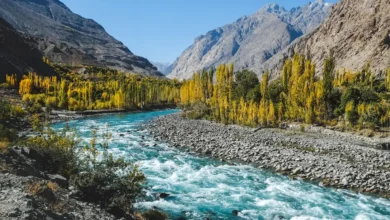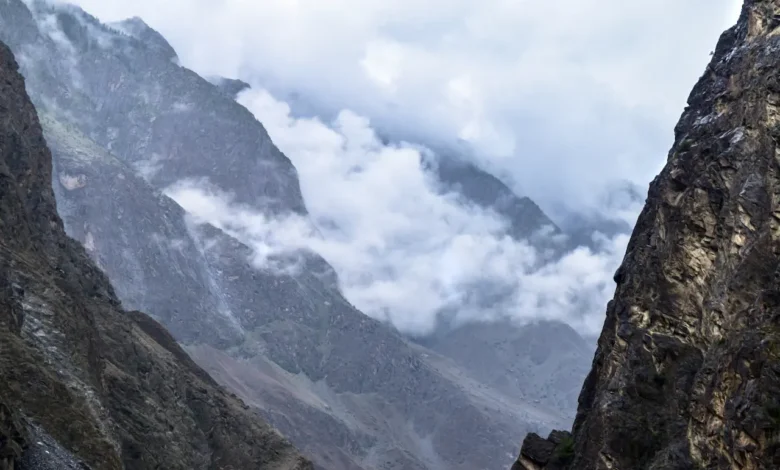
The Astore valley sits on the southern boundary of the Central Karakoram National Park — a transition zone between the dry alpine of the Karakoram and the wetter forested slopes of the western Himalayas. It is the place in CKNP where you actually find substantial forest, the place where markhor populations have most clearly recovered, and the gateway to one of the great tourist meadows of northern Pakistan: Rama. Hamid on our community-liaison team grew up in a village near Astore. Here is what makes the valley distinct.
Where the Astore valley is
The Astore valley runs south-east from the Karakoram Highway near Jaglot, climbing up to Astore town (about 2,400 m) and onward to Chilum, Rama and Deosai. It is the southernmost approach to the Nanga Parbat massif (technically outside CKNP boundaries but visible from much of the Astore valley) and the northern gateway to the Deosai Plains, the second-highest plateau in the world.
Driving time: roughly 4 hours from Gilgit, 7–8 hours from Islamabad via the Karakoram Highway and the Astore turnoff at Jaglot.
What the Astore valley is famous for
Rama Meadow and Rama Lake
The signature destination. Rama meadow sits at 3,300 m, a wide grass-and-juniper bowl with the snowfields of Nanga Parbat’s northern face filling the southern horizon. Rama Lake, a small alpine pond half an hour above the meadow, is the destination most visitors come for. The juniper grove around the meadow is one of the oldest in Pakistan — some trees dated to over 1,000 years.
It is reachable by jeep in summer; the road is rough but passable. Day-trippers from Astore town can be at Rama by lunchtime. Multi-day camping in the meadow is excellent. Avoid August holiday weekends if you want it to yourself.
The Astore markhor
The Astore valley is the global stronghold of the Astore markhor (Capra falconeri falconeri) — the spiral-horned wild goat that nearly went extinct in the 1990s and has been brought back by the community-conservancy programme. Population in the valley is now estimated at 1,500–2,000 animals, the highest density anywhere in the species’ range. Walk the cliff slopes above the river at dawn and you have a realistic chance of seeing one. The markhor is the national animal of Pakistan.
The Deosai Plains
South of Astore, the road climbs to Deosai — a vast 4,000+ m plateau, the second-highest in the world after the Tibetan Plateau, technically a separate national park (Deosai NP). Deosai is the last stronghold of the Himalayan brown bear in Pakistan; estimates put the population at 50–80 individuals on the plateau. It is also one of the great alpine wildflower displays of Asia — June and July see the meadows turn purple, blue and yellow with primroses, gentians and asters. Most visitors approach Deosai through the Astore valley.
Nanga Parbat from the north
From the upper Astore valley you get views of the Rakhiot face and the northern flanks of Nanga Parbat (8,126 m, the world’s ninth-highest peak). The famous Fairy Meadows on Nanga Parbat’s northern side is a separate but adjacent destination, accessed via Raikot Bridge on the KKH.
Forest and flora
Astore holds the most substantial Himalayan birch and Himalayan juniper stands inside or adjacent to CKNP. If your interest is botanical, the slopes above Chilum and Rama are worth two or three days of slow walking with a field guide. Blue poppy is occasionally found in the upper drainages.
Treks based out of Astore
- Astore town to Rama meadow — 1 day jeep + 1 day walk, easy.
- Rama to Deosai — 3–5 nights, moderate; can continue to Sheosar Lake.
- Astore to Chilum to Burzil Pass — longer historical caravan route.
- Day visits to Astore markhor habitat — arrange with local conservancy guides.
Practicalities
- Accommodation: hotels and guesthouses in Astore town; PTDC has a motel near Rama; tent camping at Rama meadow.
- Permits: Rama and Deosai do not require a CKNP trekking permit (Deosai has its own park entry fee). Higher routes inside CKNP boundaries may require a permit.
- Season: May through October. Rama meadow at its best in June and July.
- Roads: Astore to Rama road is jeep-only past Tarishing. Astore to Deosai is jeep-only and weather-dependent.
- Connectivity: mobile signal in Astore town; intermittent above.
Why come to Astore
If you have ten days in Gilgit-Baltistan and you want a genuine alpine experience without committing to the high-altitude rigour of the Baltoro corridor, Astore is the right answer. Forest, alpine meadow, wildlife, mountain views, accessible roads and a strong community tourism economy. It is also one of the few places in CKNP’s adjacent geography where you can plausibly see brown bear, markhor and the alpine wildflower bloom in a single trip.
Related reading: our wildlife guide for the markhor and brown bear context, our forest and flora page, our visiting CKNP page for getting there.