Explore Pakistan Wildlife: Discover the Wonders of Pakistan’s Wildlife
The fauna of the region is equally diverse. Besides numerous species of Mammals, Birds, Amphibians, Reptiles and exotic and endermic Fishes, Snow leopards, Cougar, Himalayan lynx, wolf, Red fox, Brown Bear, Himalayan ibex, Astore Markhore, Musk Deer, Urial Sheep, Marmot, Hare, Hamster, among birds Snow cock, Chukar, Alpine chough (red and yellow bill) Eagle, Hawk, Kestrel, Marsh harrier, Grey heron, black silted, pintail little gull, Hill snow carp are found in the area.
Endangered or Threatened with Extinction Species:
- Flare Horn Markhor (Markhor)
Flare horn Markhor (Rochu) is a majestic wild goat with a long spiral horn. Markhor is the National animal of Pakistan. Flare hore Markhore is mainly confined to a small, scattered population along the Indus and its tributaries in Gilgit-Baltistan, including Haramosh, Danyore, Rahimabad, Juglo,t, and Skandarabad, It is also found along both banks of the Indus near Baghicha Roundu.
- Himalayan Ibex (Kail)
The local name of Himalayan Ibex is Kail, “Skin Baq” in Balti, and Kil in Shina. It is a sturdy thickest wild goat. Mature male has large scimitar-shaped horns with prominent ridges on the front surface roughly triangular in cross-section. The favorite habitat of ibex lies in the higher elevation. Himalayan ibex are distributed throughout the higher mountain ranges of Baltistan in the both Karakoram and Himalayan ranges. They are still plentiful in some valleys of Baltistan i.e. Kharmang, Roundu, Shigar, and Khaplu.
- Musk Deer (Mushk Nafa)
The Local name of the Musk deer is Musk Nafa, It is called Khalaa in Balti and Roz in Shina. They are well known for their musk, which is found under the skin of the abdomen of the male.
Musk deer do not possess horns. It is associated with the sub-alpine scrub zone, above coniferous forest. Musk deer are reported to occur in the Burgeh Nallah of Skardu, Arindu Basha Shigar, Hoa Nullah Shigar, Baghicha Khomera nullah, and Haramosh areas of CKNP.
- Laddakh Urial (Urial)
The animal is the longest of all living sheep. The horn of the ram is huge and curled strongly, almost into a circle. Their coats are light brown and reddish grey with whitish underparts. Urial is widely distributed in the trans-
Himalayan region in rough and rocky areas. In Baltistan, it is distributed in Kharpocho crossing the river Indus from Sarfarang. It is also found in the Golap Dumurdo area of Upper Braldo Shigar valley.
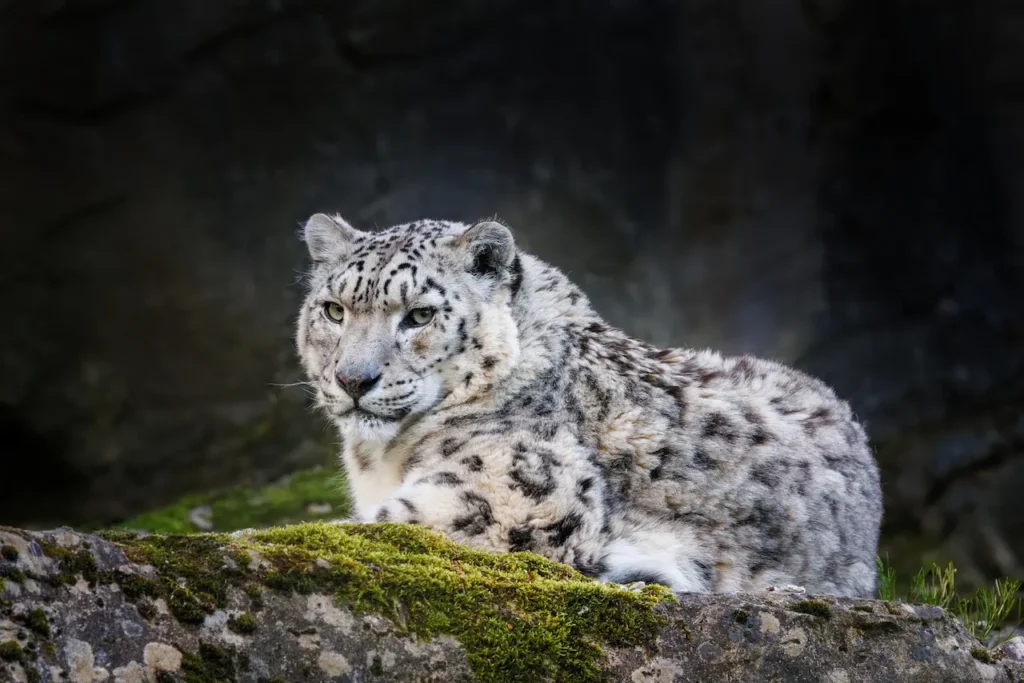
- Snow Leopard (Cheetah)
The snow leopard is considered the most beautiful among the large cats and is well known for its beautiful thick and luxuriant fur. It is found in the higher mountain ranges of Gilgit-Baltistan.
It also exists in the inner mountain ranges and inhibits the southern slopes of the main Himalayan chain. It is also found in the belief of Baghicha Roundu and the Basho area.
- Himalayan Brown Bear (Bhoura Reach)
The brown bear is one of the rare species in the world which is found in Deosai plain. It is distributed from Kachura Mundur nullah and Shatong nallah in the Deosai plateau and across the whole ranges of Himalayan up to Manthokha nallah. In CKNP it is reported to be found in Arindo and Hoa Nullah Shigar Valley.
- Golden Marmot
The Golden marmot is widely spread over the whole of the Deosai plain, they live in colonies, appearing as large earth mounds with multiple holes. Golden marmot can easily be seen in Deosai.
Bird Watching:
- Himalayan Snow Cock (Raam Chukor)
It is a large stout, high-game bird large chicken. The head and neck are dark grey while the sides of the forehead, ear-covere,d, and throat are white. Himalayan snow cock is widely distributed at relatively high elevations. It is preferable to inhabit the shrubby areas at the snow belt of the mountain of Gilgit-Baltistan.
- Chukar Partridge (Chokor)
Chukar partridge is the national bird of Pakistan. It is a medium stout game of birds. Chukar is widely distributed at relatively low elevations. It inhibits the wheat crops, herbs, and shrubs in the field or ground and greener pastures of the mountain of Gilgit-Baltistan.
Wildlife In Pakistan
The mountainous regions of the Himalayan Range, Karakoram Range, and Hindukush Range are richer in fauna and vegetation than other parts of the nation. These areas are home to a variety of wildlife, including sub-alpine scrub, alpine grassland,s and temperate forest.
These habitats are home to a wide range of wild animals. As the areas are hard to reach, many animals are present, though some are threatened for other reasons. The main wildlife species include the snow leopard and black and brown bears. Other animals include the lynx and otter.
Snow Partridges and Snowcocks
Snow partridges and snowcocks live at higher altitudes. Lower elevations are home to the Rhesus Monkey, Common Langur, Red Fox, Black Bear, Common Leopard, several species of flying squirrels (including chakor), chakor partridge, and pheasants, such as Koklass, Kaleej, and Cheer.
The snow leopard, Marco Polo’s Sheep, the musk deer, and the brown bear, among others, are all endangered. Tibetan wild ass populations and blue sheep numbers have decreased dramatically. The IUCN Red Data Book lists the cheer pheasant as extinct within
Wild Animals
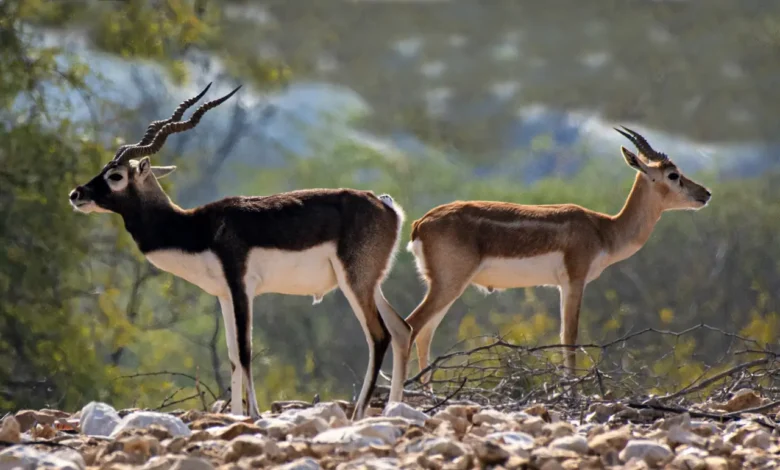
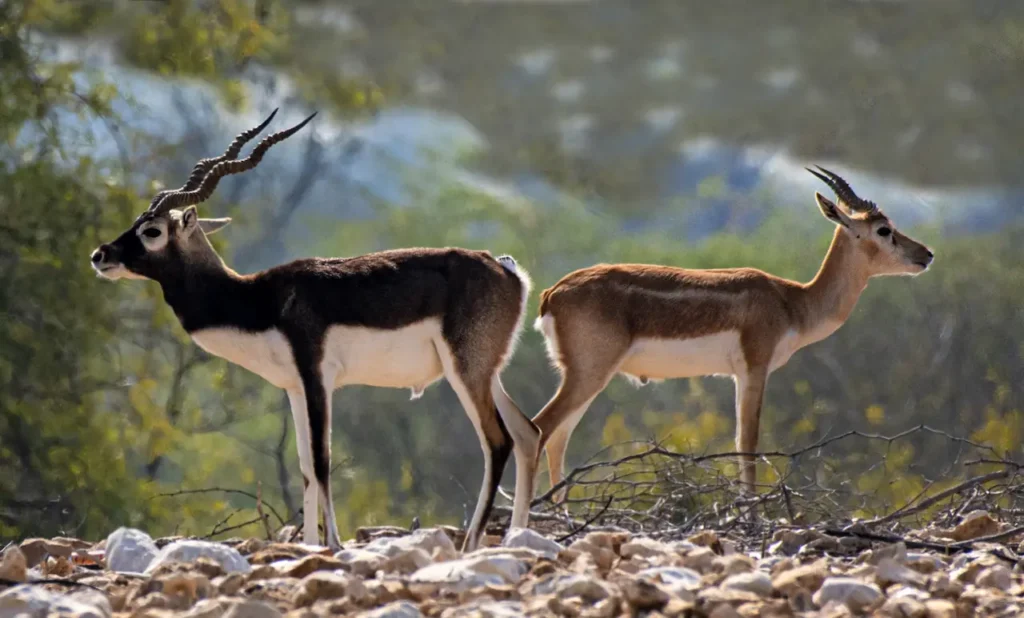
Wild animals are in danger due to the lack of vegetation, harsh climatic conditions, and the large number of animals grazing on deserts. In some parts of Thall and Cholistan, the situation is similar to the floodplains. The only animal that can be found in Thall in large numbers is the chinkara. Blackbucks, which were once abundant in
- Cholistan
Cholistan, are now extinct. Efforts are made to bring them back. Some parts of Cholistan and the Pak-Indian Border are home to a small number of bluebells. The main birds in the area are Indian courser, sandgrouse species, and grey partridge. Cholistan has some peafowl.
- Chinkara Gazelle
The Thar Desert is home to a healthy population of Chinkara Gazelle. Peacocks can only be found in the wild due to the protection that they receive in Hindu communities. Wild ass migrates in search of food from the Indian Rann of Kutch into the Pakistani Rann.
- Houbara Bustards
Houbara Bustards are regular visitors to the desert during winter. The number of these birds has been reduced by visiting diplomats. The great Indian Bustard is occasionally sighted. Imperial sandgrouses are also migrants in these areas. Grey partridges can be seen frequently. Also threatened is the python.
Sulaiman Ranges and Kirthar Ranges are home to habitats with unique characteristics. The Sulaiman and Kirthar Ranges are home to the straight-horned Markhor, the chinkara, and the urial. In the latter, the Sindh Ibex, the uria,l and the chinkara, as well as the common leopard, live.
- Straight-horned Markhor
In the tribal areas, there are a few straight-horned markshors, which are almost extinct within the settled boundaries of Pakistan. Birds like thchakraor, grey partridge, and seesee are commonly found.
Along the rivers, tamarisk and reed beds support populations of hog deers and black partridges. A reduction in their population has also occurred due to heavy flooding. In the Indus River, below the Chashma Barrage, you can find the Indus Dolphin, fishing cat, and smooth otter.
- Gavial
In Pakistan, the gavial is now extinct. In lower Sindh, the crocodile can be found in very small numbers. The wild boar population has increased due to the immunity that they enjoy in a muslim society which forbids their consumption by humans.
Balochistan’s south-western mountains are home to the following animals: Sindh Ibex, Chiltan Markhor (also known as straight horned or Chiltan Markhor), wild sheep, Blandford fox, Blandford’s fox and Blandford’s fox.
Also, the chinkara gazelle, goitered gazelle, marsh crocodile, and Blandford’s foxy. Makran (Baluchistan bear) is critically endangered and the cheetah may be extinct. Here you can also find the Houbara Bustard, a migratory bird, sandgrouses, black and gray partridges, and the see-see and chakor partridges.
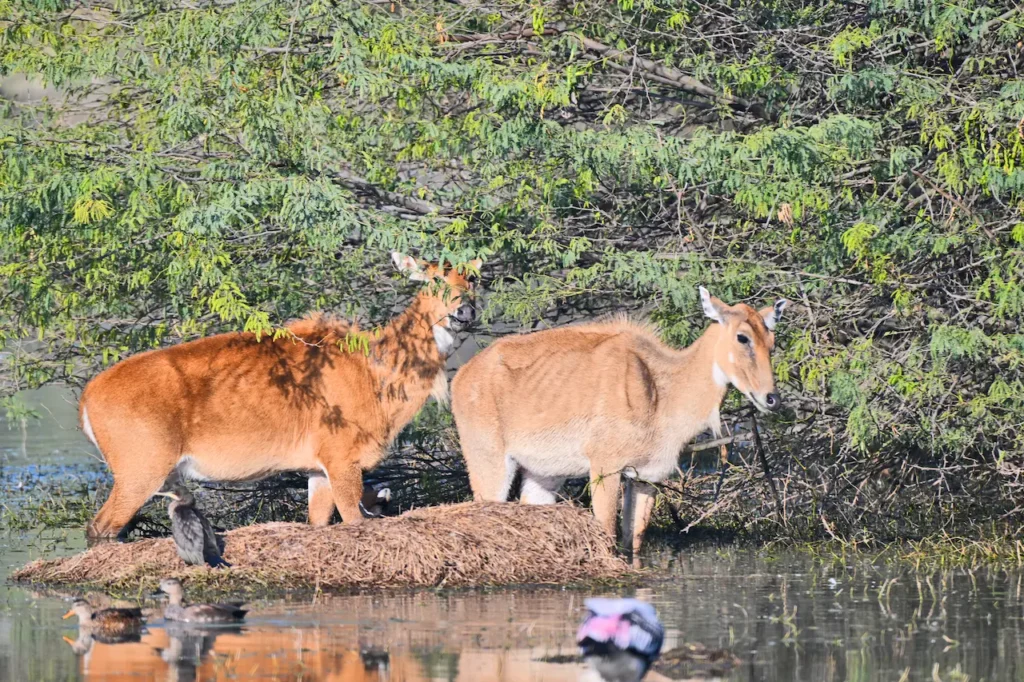
In the last century, irrigated forest plantations became the dominant land use. They are ideal habitats for chinkaras, hog deer, and blue bulls. Forest management doesn’t cater to these wild animals. The extinction of certain species has been caused by this, combined with the ineffective implementation of laws.
The habitat disturbances caused by humans have led to the failure of ungulates to establish themselves. However, partridges are flourishing.
- Striped Hyena
In the sparsely-populated areas of the country, the striped hyena is widely spread. Information about them, however, is scarce. Carnivores are notoriously difficult to study because they live a nocturnal lifestyle and move a lot. Also, the black bear and brown beaver populations are not fully understood.
In Pakistan, there are many birds of prey such as the peregrine falcon, the cherrug, or saker, the tawny and imperial eagles, and greater spotted and imperial eagles. The ospreys, the shikras, and the black-winged kits can also be found, but the population status is unknown.
The 1,050 km of coastline in Pakistan is made up of different habitats, which support a diverse range of animals. Of these, over 1,000 are fish species. The marine fauna and flora of Pakistan have not been properly studied.
Deficient Information is Available on These Species. Four Species of Turtles are Found Along the Coast.
- Leatherback Ridley
The leatherback, ridley, and hawksbill, all of which are important economically. Their population is decreasing due to habitat loss and human disturbances.
In Pakistan, there are eight different species of freshwater Turtles. Other reptiles include agamas and diamond snakes as well as sand lizards.
- Waterfowl
The country has large water bodies that support both resident and migrating waterfowl. The extent of the wetlands changes constantly. On one hand, swamps, marshes, and wetlands are being drained to reclaim the land. On the other, large water bodies (dams) have been built for irrigation.
Water logging has been caused by canal irrigation. These areas provide an excellent habitat for waterfowl, which is why they support such a large number. The wetlands of Asia are important wintering grounds and green routes. Waterfowl are important in
Pakistan. These include ducks (mallards, pintails, shovelers, garganeys, teals, and tufted gadwalls), geese, coots,s and flamingos. Also, there are spoonbills, spoonbilled pelicans, stor, ks, and ibises. Marbled teals and white-headed Ducks are now less common and visit the wetlands only infrequently.
Waterfowl include (resident) gallinules. Moohens and Rails. Gulls. Terns. Water cock. Grebes. Cormorants. Egrets. Bitterns. Jakanas. Residents are the spot-billed lesser whistler teal and cotton teal. During the winter, a rich water fauna is present along the coast.
Pakistani Borders
Pakistani borders. The western horned Tragopan, which was thought to be extinct in Pakistan, has been relocated, albeit at a low number, to Indus Kohistan. Hunting and human interference are the main threats to wild animal populations in northern mountainous areas.
Scrub forests cover the Himalayan foothills, the Potohar Region, the Salt Range, and the Kala Chitta Range. They have mostly been reduced to a scanty growth.
These habitats support medium-sized animals such as the Punjab urial (a deer), barking deer (chinkara), partridges, grey and black, see see, and chakra. These habitats also support a variety of songbird species.
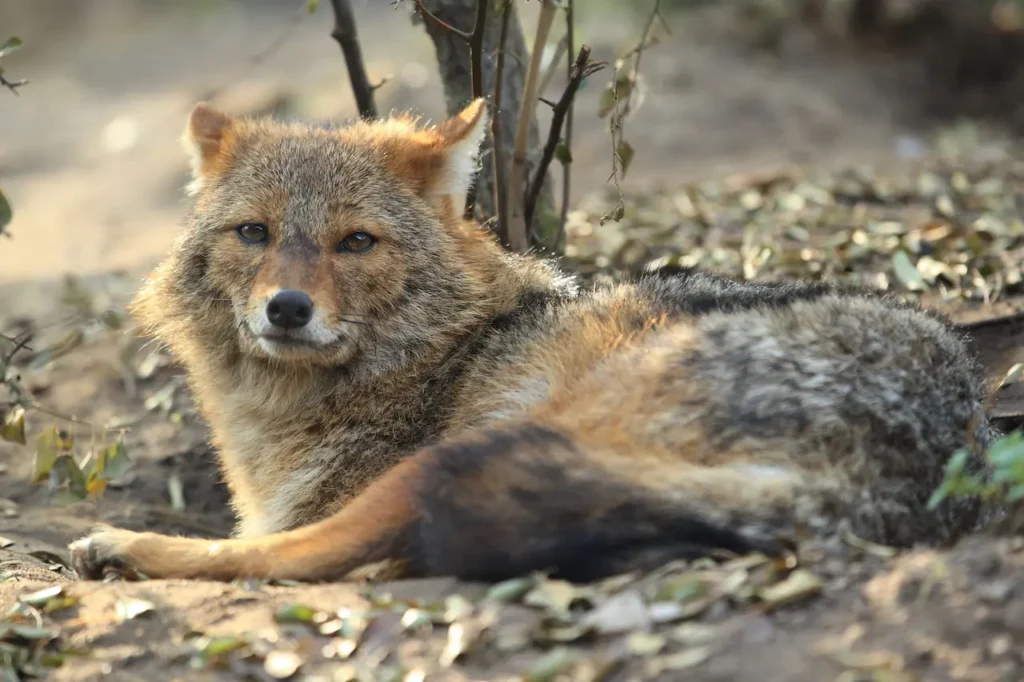
To grow crops, vast floodplains of the Indus have been cleared. There is very little natural habitat left. In these areas, only animals such as the jackal and mongoose are found.
In riverine tracts, hog deer can be found. Black and grey partridges are supported by crop residues and natural growth.